

25 Real Websites for Fast Online Earnings
25 Real Websites for Fast Online Earnings
I remember the first time I tried to make money online. I wasn’t looking for some huge business or a complicated passive-income system. I just wanted to complete a small task, get paid for it, and know that the money was actually real.
That sounds simple, but finding websites that genuinely pay is where things get confusing.

Some platforms advertise “instant cash” when you still have to reach a minimum withdrawal amount. Others release your earnings quickly but make you wait for account verification or payment processing. And some websites simply aren’t worth the time because the work pays too little.
So I decided to look at online earning from a more practical angle.
Instead of asking which website promises the biggest income, a better question is: What can you actually do on the platform, how does the payment process work, and is the time you spend worth it?
That’s what this list focuses on.
One important point before we start: “instant” does not always mean money arrives in your bank account immediately after finishing a task. Depending on the website, you may have to wait for approval, reach a minimum balance, pass verification, or wait for the payment provider.
With that in mind, here are 25 websites worth knowing about.
💻 1. Fiverr
Fiverr is useful if you already have a skill that can be packaged as a simple service.
You can offer things such as logo design, video editing, article writing, thumbnail creation, WordPress help, voice-over work, social media management, or AI-assisted services.

The nice thing about Fiverr is that you don’t have to search through every project and send a proposal for every order. You create a service listing and potential customers can find it.
The mistake many beginners make is creating ten different services before understanding what customers actually want.
Start with one clear service.
For example, instead of saying “I do graphic design,” offer something specific such as “I will design three YouTube thumbnails.”
Fiverr offers several withdrawal methods, including PayPal and Payoneer-based options, but withdrawal requirements and processing times depend on the method and account.
💼 2. Upwork
Upwork is better suited to people who want to work directly with clients.
You can find projects involving writing, programming, design, marketing, customer support, virtual assistance and many other skills.
One thing I would not do is apply to dozens of random projects just because they look easy.
A better approach is to choose a narrow service and build your profile around it.
Also, don’t assume that completing a project means the money instantly reaches your bank account. Upwork uses different payment timelines depending on whether the contract is hourly or fixed-price. Fixed-price payments, for example, can go through a security hold after client approval.
That’s normal on a platform handling client payments.
🧑💻 3. Freelancer
Freelancer gives freelancers access to projects across writing, programming, design, data entry, marketing and other categories.
The basic process is simple: create your profile, find relevant projects, submit proposals and complete the work if selected.
It can take time to get your first client because you’re competing with established freelancers.
My practical tip is to avoid competing only on price. A cheap proposal isn’t automatically a good proposal.
Show that you understand what the client needs.
🛠️ 4. PeoplePerHour
PeoplePerHour is another freelance marketplace where users can offer services and work on client projects.
It can be useful for writers, designers, developers, marketers and virtual assistants.
There is one important lesson here: don’t confuse “client paid” with “money available in your bank.”
PeoplePerHour explains that payments can go through security checks and a clearing period before they become available for withdrawal.
So this is a platform for earning online, but it shouldn’t be treated like an instant-cash machine.
🎯 5. Contra
Contra focuses heavily on independent professionals and creative work.
You can use it to showcase your services and portfolio instead of relying only on a traditional resume.
It makes more sense if you have something visual or professional to show, such as websites, designs, writing samples, videos or marketing campaigns.
A strong portfolio can do more for you than writing a long profile description.
🧾 6. Guru
Guru is a freelance marketplace covering categories such as programming, writing, design, administration and business services.
It’s worth considering if you want another place to search for freelance clients instead of relying on one marketplace.
The important part is consistency. Having accounts on multiple websites doesn’t automatically increase your income. Applying to suitable projects and delivering good work does.
🤖 7. Clickworker
Clickworker takes a different approach.
Instead of looking mainly for traditional freelance projects, you can find smaller online tasks. Depending on availability and eligibility, tasks can involve data-related work, research, text creation, categorization and other microtasks.

This can be attractive when you don’t want to commit to a large client project.
The downside is that task availability can change. You might find plenty of work one day and much less the next.
That’s why I would treat microtasks as flexible side income rather than a guaranteed monthly salary.
📱 8. Toloka
Toloka is another platform built around smaller online tasks.
Some tasks involve checking information, categorizing content or completing data-related assignments.
The work can be repetitive, so calculate your effective hourly earnings.
If a task takes ten minutes and pays very little, completing hundreds of them isn’t necessarily a good use of your time.
🔬 9. Prolific
Prolific connects participants with research studies.
This is different from ordinary survey websites because many studies are created for academic or research purposes.
The number of available studies can vary based on your profile and eligibility.
The biggest lesson with research platforms is to complete your profile accurately. Your answers help determine which studies you can participate in.
Never create false information just to qualify for more studies. That can create account problems and isn’t worth the risk.
🎁 10. Swagbucks
Swagbucks is designed around rewards rather than traditional freelance work.
Depending on your location and eligibility, activities can include surveys, shopping-related offers, searches and other promotional tasks.
This type of platform is easy to understand, but expectations matter.
You aren’t replacing a full-time income by answering a few surveys during lunch.
It’s better for earning occasional extra money from spare time.
💵 11. InboxDollars
InboxDollars is another rewards platform where users can earn from activities such as surveys and promotional offers.
The availability of tasks and rewards can depend on location.
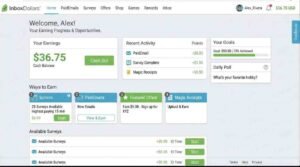
One mistake people make with reward websites is spending hours chasing every available offer.
Before starting, look at the reward and estimate how long the activity will take.
Your time has value too.
🧪 12. UserTesting
If you enjoy trying websites and explaining what you think about them, UserTesting can be interesting.
Companies use user feedback to understand how real people interact with websites, apps and digital products.
You may be asked to complete tasks while explaining your thoughts.
The key skill isn’t being a technology expert.
It’s being able to clearly explain what you see, what confuses you and what you expected to happen.
📝 13. Userlytics
Userlytics is another user-research platform.
Participants can sometimes test websites, apps and digital experiences and provide feedback.
These opportunities aren’t guaranteed every day, so don’t treat the platform as a fixed paycheck.
Instead, check for suitable studies when you have spare time.
👥 14. Respondent
Respondent is aimed more toward research participants and professionals who fit specific study requirements.
Some studies can pay significantly more than ordinary survey tasks because researchers are looking for people with particular professional or consumer experience.
The catch is obvious: not everyone will qualify.
That isn’t necessarily a problem. A single suitable research study can sometimes be more worthwhile than spending hours on tiny tasks.
🎮 15. PlaytestCloud
If you like testing games, PlaytestCloud is worth knowing about.
Game developers need people to try games and provide feedback about the experience.
You may have to speak while playing and explain what you are thinking.
The number of available tests varies, and eligibility can depend on your location and profile.
Don’t treat it as “playing games for unlimited money.” Think of it as paid user testing where games happen to be the product.
🎙️ 16. Rev
Rev has been known for transcription, captioning and related language work.
This type of work requires patience because listening to audio and accurately converting it into text can take longer than beginners expect.
One lesson I learned from looking at transcription work is that typing speed isn’t the only factor.
Audio quality matters.
Background noise, multiple speakers and unclear pronunciation can turn a supposedly short recording into a time-consuming project.
⌨️ 17. TranscribeMe
TranscribeMe is another platform associated with transcription work.
It’s worth considering if you have strong English listening and typing skills.
Before jumping in, practice with different accents and noisy recordings.
If you can only transcribe perfectly clear audio, difficult assignments may quickly become frustrating.
📄 18. Scribie
Scribie is another name people encounter when looking for online transcription work.
The concept is straightforward: listen to audio and turn it into written text.
The important calculation is your actual hourly return.
For example, don’t look only at the payment attached to an audio file. Ask yourself how long it takes you to listen, type, proofread and submit it.
That gives you a much more realistic picture.
✍️ 19. Medium
Medium is a different type of opportunity because you’re not necessarily being paid immediately for completing a single assignment.
You publish useful articles and can potentially earn through Medium’s monetization system if you meet the program requirements.
This is better for people who enjoy writing consistently.
A common mistake is publishing ten random articles and expecting meaningful income immediately.
Writing platforms usually reward useful content and reader engagement over time.
📰 20. Vocal
Vocal allows creators to publish written content and potentially earn from readership and other platform features.
It’s useful for people who enjoy storytelling, personal experiences, tutorials and educational content.
Don’t copy articles from other websites and change a few words.
Apart from creating poor content, that approach can damage your reputation as a writer.
Write from your own research and experience.
📸 21. Foap
If you take good photos or create useful visual content with your phone, Foap is one platform to explore.
The interesting part is that you don’t necessarily need an expensive camera to start learning photography.
A modern smartphone can produce surprisingly good images when lighting and composition are handled properly.
But don’t upload hundreds of random pictures.
Think about what businesses, advertisers and buyers might actually need.
🖼️ 22. Shutterstock
Shutterstock gives contributors a way to submit photos, illustrations, video and other visual assets.
This is more of a long-term content library than an instant-money method.
One photo might earn very little. A useful portfolio containing hundreds of relevant assets can create more opportunities over time.
This is where consistency matters more than chasing one viral image.
🎨 23. Adobe Stock
Adobe Stock is another marketplace for creators who produce stock photos, illustrations, videos and other digital assets.
If you already create designs, photography or video, uploading suitable work can turn existing skills into another income channel.
The biggest mistake is uploading content without considering demand.
Ask yourself whether someone designing a website, advertisement, presentation or social post would actually search for that asset.
☕ 24. Ko-fi
Ko-fi is useful for creators who already have an audience.
You can use it to accept support, sell digital products or offer certain paid content and services depending on your setup.
This is where social media can make a major difference.
For example, a designer could share useful design tips on Instagram and direct interested followers to a page where they can support the creator or purchase a digital product.
Without an audience, however, simply creating a Ko-fi page won’t magically generate sales.
🛒 25. Gumroad
Gumroad is particularly interesting if you have something digital to sell.
That could include templates, guides, digital artwork, educational resources, spreadsheets or other original digital products.
The advantage is that you’re selling something you create once and can potentially sell multiple times.
The difficult part is getting people to discover the product.
A good product with no traffic can still make zero sales.
That’s why creators often combine Gumroad with YouTube, Instagram, Pinterest, newsletters or another audience-building channel.
⚡ Which Type of Website Should You Choose?
After looking at these 25 options, I wouldn’t recommend signing up for all of them.
That usually creates more work instead of more income.
Instead, choose according to what you already know.
If you have a professional skill: try freelance platforms such as Fiverr, Upwork, Freelancer, Contra or Guru.
If you want small tasks: look at Clickworker, Toloka or research platforms.
If you like testing websites and apps: user-research platforms may make more sense.
If you enjoy writing: Medium, Vocal and writing-focused freelance platforms are worth exploring.
If you’re a photographer or designer: stock-content platforms can turn your existing work into another revenue stream.
If you have an audience: Ko-fi and Gumroad become much more interesting.
The right choice depends more on your skill and available time than on a website’s advertised earning potential.
🧠 How to Start Without Wasting Your Time
Here’s the process I’d use if starting from zero.
Step 1: Pick one earning method
Don’t open ten accounts tonight.
Choose one category.
For example, if you’re good at writing, start with freelance writing rather than jumping between surveys, transcription and design.
Step 2: Set up your payment method first
Check which payout methods are available in your country before investing hours into a platform.
This is an easy mistake to avoid.
A website can be completely legitimate while still not offering the payment method that’s convenient for you.
Step 3: Create a simple profile
Don’t write a giant biography.
Tell potential clients what you do, who you help and what type of result you can provide.
If you’re selling a service, examples of your work are often more useful than another paragraph about yourself.
Step 4: Start with manageable work
Your first objective doesn’t have to be $1,000.
Getting your first legitimate payment teaches you how the platform works.
You’ll learn about client communication, revisions, deadlines, fees and withdrawals.
Step 5: Track your actual hourly income
This is probably the most useful habit.
Keep a simple spreadsheet with:
- Website
- Task or project
- Time spent
- Amount earned
- Platform fees
- Payment received
- Effective hourly rate
After a few weeks, you’ll know which platforms deserve your attention.
🚨 Common Mistakes People Make

Believing the word “instant”
This is the biggest one.
A platform can process an eligible payout quickly while still requiring you to complete verification, reach a minimum withdrawal amount or wait for a client approval.
For example, Fiverr lists different transfer times and requirements depending on the withdrawal method.
So always check the platform’s current payment rules before assuming you’ll receive money immediately.
Paying someone to “unlock” a job
Be extremely careful when someone tells you that you need to pay a fee before receiving your supposed earnings.
A legitimate platform may charge service or transaction fees, but an unexpected request to send money to a stranger to release a payment is a major warning sign.
Chasing high earnings instead of good work
You’ll see screenshots online showing huge monthly income.
Those screenshots don’t tell you how long the person has been working, how many clients they have, what fees they paid or how much experience they had beforehand.
Look at your own numbers.
Ignoring your location
Not every website offers the same tasks, payout options or features in every country.
Before spending time building an account, check whether the platform supports your country and your preferred payment method.
Using fake information
Don’t create fake profiles to qualify for opportunities.
Research and freelance platforms may verify identity, payment information or other account details.
If your information doesn’t match, your account can run into problems when you actually try to withdraw money.
💡 A Better Way to Think About Online Earnings
The biggest change happens when you stop looking for a website that “pays instantly” and start looking for a website that matches your ability.
If you have a skill, sell the skill.
If you have professional knowledge, look for research or consulting opportunities.
If you can create content, build a content library.
If you have an audience, sell something useful to that audience.
If you only have a small amount of spare time, microtasks and rewards can be an option, but keep your expectations realistic.
And don’t forget the value of your time.
If one website pays $5 for an hour of frustrating work while another opportunity can pay more for a skill you already have, the second option may make much more sense.
That’s the part many “instant money” lists leave out.
The website itself isn’t what makes the money.
Your skill, time, consistency and ability to choose worthwhile work are what make the difference.
Final Thoughts
There are plenty of legitimate ways to earn money online, but there isn’t a magic website where everyone completes a few clicks and instantly becomes profitable.
Some platforms are designed for freelancers. Others focus on research, microtasks, content, testing or digital products.
The smartest approach is to start small, understand the payment rules and track what you’re actually earning.
Give one platform a fair test instead of opening 25 accounts at once.
If it works for you, improve your profile, get better at the work and gradually increase the value of what you offer.
That’s a much more realistic path to earning money online than chasing every website that promises “instant cash.”