
Government Jobs
Public Health Officer Jobs in Pakistan Full Time

AKRSP Public Health Officer Jobs: Real Requirements, Duties & How to Apply
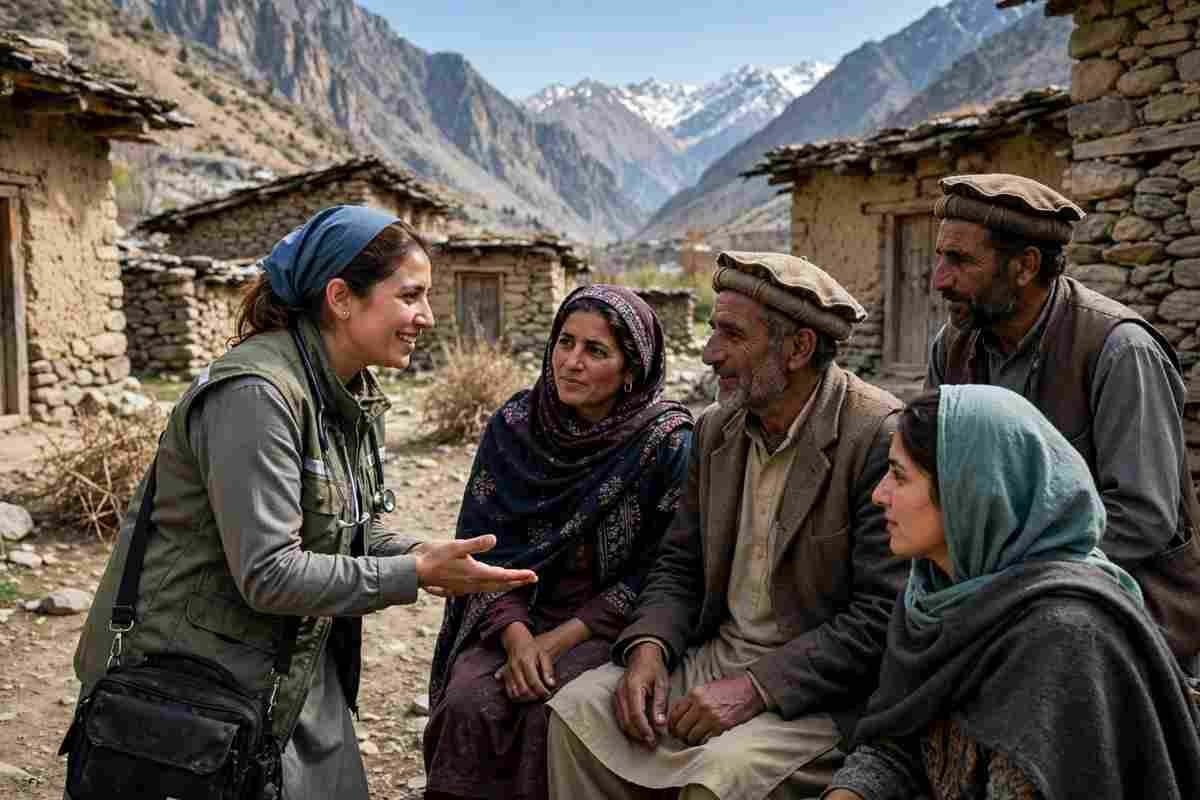
If you are searching for AKRSP Public Health Officer jobs, here is the straight picture: the Aga Khan Rural Support Programme regularly hires Public Health Officers for its programme offices across Gilgit-Baltistan, Chitral and Sindh — most recently for Diamer, Astore, Skardu, Lower Chitral and Sujawal. These are real, respected NGO jobs. But they are also some of the most misreported jobs on Pakistani job blogs, with wrong locations, dead apply links and invented salaries floating around. This guide fixes all of that. You will find what the role actually involves, who can genuinely apply, the exact way AKRSP accepts applications, and how to avoid the traps that waste most candidates’ time.
One honest note up front: the two most recent Public Health Officer rounds — February 2026 (four districts) and the Astore posting on AKRSP’s official website (deadline 7 July 2026) — have both closed. Nothing here will pretend a vacancy is open when it is not. What this guide does is prepare you so thoroughly that when the next round opens, your application is among the strongest in the pile.
What a Public Health Officer Actually Does at AKRSP
Forget the generic “health job” descriptions you see on aggregator sites. AKRSP’s Public Health Officer is a field-heavy programme role, not a desk job and not a clinical posting. Based on AKRSP’s own recent advertisements, the officer’s work revolves around community health programmes — particularly adolescent health, family planning and SRHR (sexual and reproductive health and rights) interventions.
Here is what the role genuinely involves, drawn from AKRSP’s February 2026 advertisement for four Public Health Officer positions:
- Programme implementation: Supporting the planning, implementation and monitoring of adolescent health and family planning programmes in the assigned district.
- Government coordination: Strengthening coordination with government health departments, health facilities and community stakeholders — you are the bridge between AKRSP’s programme and the public health system.
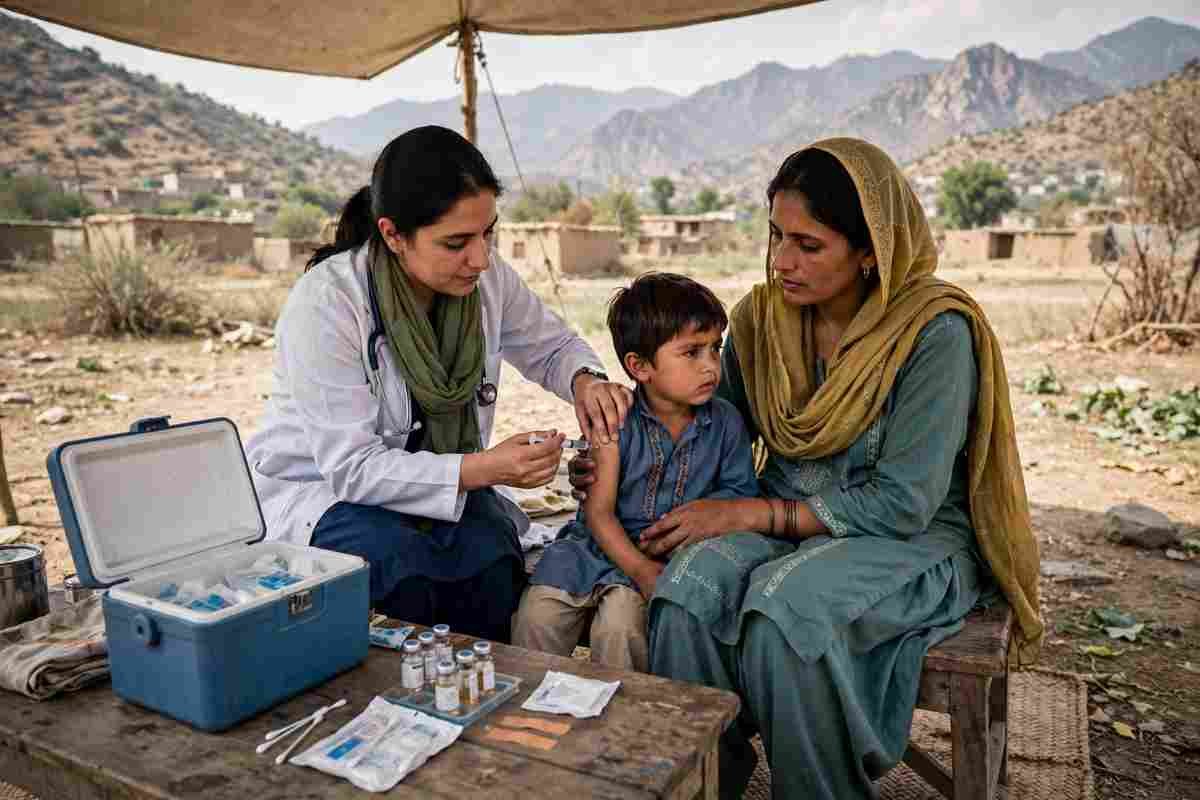
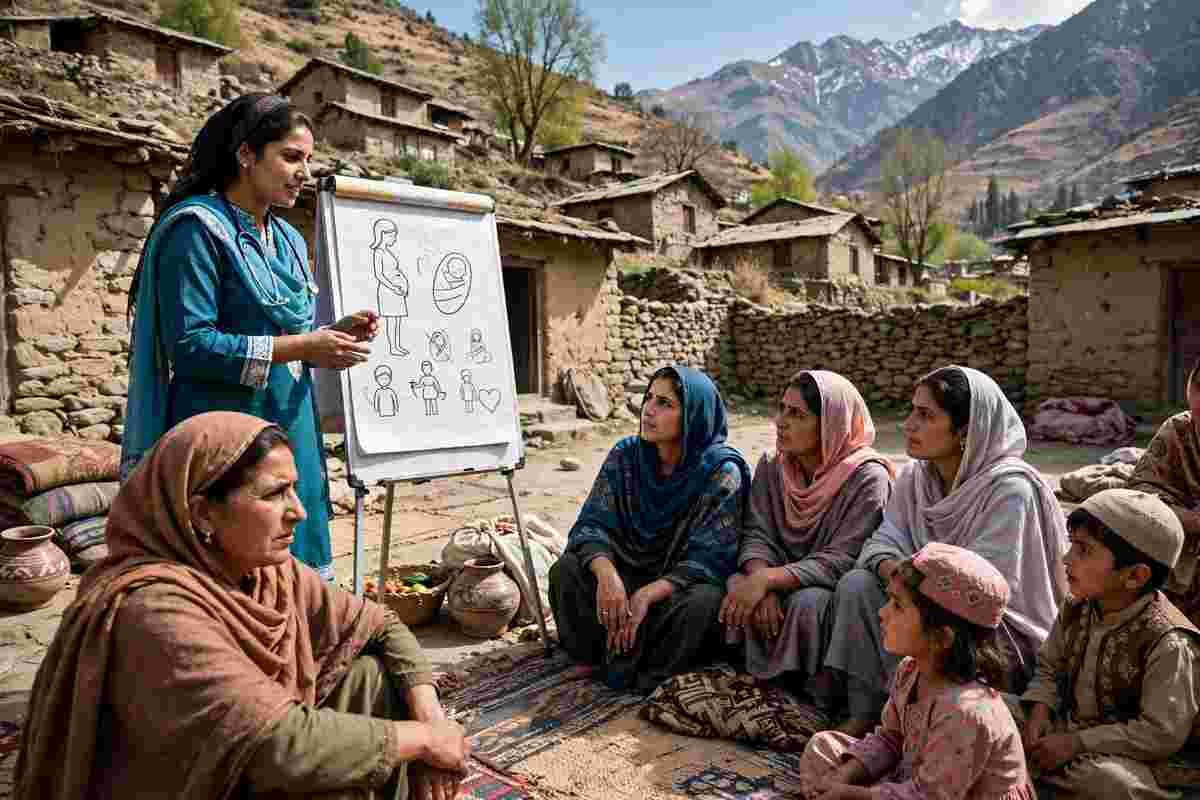
- Community work: Facilitating community awareness sessions and behaviour-change initiatives, often in remote villages where health literacy is low.
- Capacity building: Supporting training of service providers and community structures so the work continues after the project cycle.
- Documentation and reporting: Ensuring quality documentation, reporting and data management in line with programme and donor requirements — donors audit this work closely.
In the Astore posting on AKRSP’s official website, the emphasis shifted slightly toward routine immunisation: the officer needed hands-on experience with immunisation programmes and strong knowledge of EPI (Expanded Programme on Immunisation) protocols. The lesson? Read each advertisement carefully — the focus area changes with the project funding the position.
Where These Jobs Are Actually Located (Get This Right)
This is where most job blogs — including the old version of this very listing — go wrong. You will see AKRSP’s location written as “Gilgit Baltistan, Khyber Pakhtunkhwa (KPK)” as if the two were the same place. They are not.
Diamer, Astore and Skardu are districts of Gilgit-Baltistan. Gilgit-Baltistan is not part of Khyber Pakhtunkhwa. AKRSP works across all ten districts of Gilgit-Baltistan, two districts of Chitral (which are in KPK), and two districts of Sindh. So a Public Health Officer post in Diamer means Gilgit-Baltistan; one in Lower Chitral means KPK; one in Sujawal means Sindh. Getting the location right matters more than it sounds — AKRSP gives preference to candidates from the local district, and applying with the wrong regional understanding signals that you have not done basic homework.
Recent duty stations for this role have included:
- Diamer (Gilgit-Baltistan) — District Programme Office
- Astore (Gilgit-Baltistan) — Area Office
- Skardu (Gilgit-Baltistan)
- Lower Chitral (Khyber Pakhtunkhwa)
- Sujawal (Sindh)
If you are from Diamer, Astore, or the surrounding region, say so clearly in your application — AKRSP’s own postings state that preference goes to local candidates and those with contextual understanding of the area. That single line in your cover email can matter more than an extra certificate.
Who Can Apply for AKRSP Public Health Officer Jobs: Real Eligibility Criteria
AKRSP is consistent about what it wants for this role. Pulling together its recent advertisements, here is the genuine eligibility picture:
Education
- 16 years of education in Public Health, BScN (nursing), or a related Health Sciences degree from an HEC-recognised university. The February 2026 round accepted “Public Health, BScN, or a related discipline”; the Astore posting specified Public Health, BScN or a related Health Sciences degree.
- A Master’s degree in Public Health was listed as preferred in the earlier 2024 Diamer advertisement. If you hold an MPH or MSPH, you are squarely in the target profile.
Experience
- Minimum two years of experience in public health initiatives, routine immunisation programmes, or donor-funded health projects. Fresh graduates, honestly, are not competitive for this specific title — but keep reading, because there is a path for you below.
- For programme-funded rounds (like February 2026), experience specifically in adolescent health, SRHR and family planning interventions was required — not just general health experience.
- For the Astore round, it was EPI protocols and immunisation programme experience instead. Match your CV to the round.
Skills that actually get noticed
- Strong written and spoken English and Urdu; working knowledge of local languages (Shina, Burushaski, Khowar depending on district) is a genuine advantage.
- Ability to conduct community sessions and meetings — this is a talking-to-villagers job as much as a reporting job.
- Gender sensitivity and familiarity with safeguarding principles — AKRSP states this explicitly and means it.
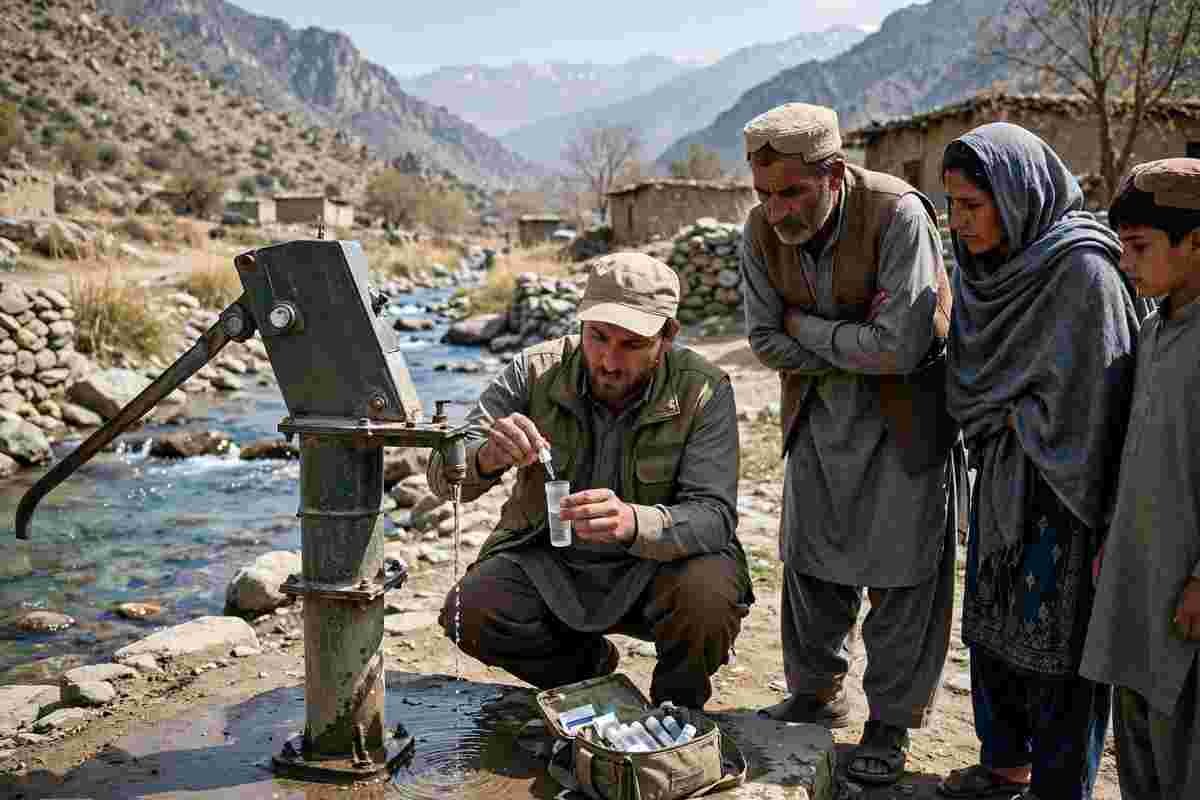
- Comfort with field travel in mountain districts, often on difficult roads and in harsh weather.
If you are a fresh public health graduate without the two years, do not treat this as a dead end. AKRSP and similar AKDN agencies regularly advertise junior and project-based health roles — our guide on becoming a pharmacy technician and clinical nurse roles in Karachi cover adjacent health career paths, and the Information Management Officer track at UNOPS is another NGO route worth knowing about. Build your two years through internships, LHW programme work, or district health office attachments, then come back for this title.
How to Apply: The Exact Process AKRSP Uses
Here is the part most blogs get wrong. AKRSP does not hire through job aggregators. The old version of this listing pointed applicants to talabilm.com — an aggregator page with an expired 2024 posting. That is the weakest possible route: aggregators repost old ads, sometimes with wrong deadlines, and your application may never reach AKRSP at all.
Here is how AKRSP actually recruits, step by step:
- Watch the official careers page. AKRSP posts openings on its own website at akrsp.org.pk/jobs/. Bookmark it and check it weekly. This is the single most reliable source — every genuine round appears here.
- Watch the newspapers. AKRSP advertises in regional papers, particularly Daily K2 for Gilgit-Baltistan positions. Many rounds appear in print a day or two before they surface online.
- Prepare your CV for email submission. AKRSP’s standard method is emailing your resume to hr_akrsppk@akdn.org. Keep one polished, two-page CV ready at all times — health-sector CVs should lead with qualifications, field experience and language skills.
- Use the exact subject line. This is where most applications die. AKRSP’s postings specify the subject format — for example, “Application for the Position of Public Health Officer – District ________” (February 2026 round) or “Application for the Position of Public Health Officer” (Astore round). Copy the format from the live advertisement exactly, filling in your district where asked. Applications with vague subjects like “Job application” or “CV attached” are routinely filtered out.
- Attach complete documents. Updated CV, degrees/transcripts, experience certificates, CNIC, domicile and a recent photograph. Incomplete applications are not followed up — they are simply set aside.
- Apply before the deadline, not on it. Email servers, file sizes and last-minute panic are real. Send at least 48 hours early.
- Wait for shortlisting. Only shortlisted candidates are contacted for test/interview. No TA/DA is admissible for appearing in tests — budget your own travel to Gilgit or the test centre.

What Happens After You Apply
Knowing the pipeline removes a lot of anxiety. After the deadline closes, AKRSP’s HR screens applications against the advertised criteria — this is why the subject line and complete documents matter so much. Shortlisted candidates are typically called for a written test and/or panel interview, sometimes at the Regional Programme Office in Gilgit or the relevant district office.
Two things worth knowing: first, AKRSP tells candidates upfront that applying means consenting to an independent professional background check — keep your credentials clean and verifiable. Second, their recruitment policy explicitly reflects a commitment to safeguarding children and adults; expect questions or checks around this, especially for a community-facing health role. Women are actively encouraged to apply — AKRSP describes itself as an equal opportunity employer, and several of its health postings have specifically welcomed female candidates.
AKRSP Public Health Officer Salary: The Honest Picture
Let us be direct: AKRSP does not publish salary figures in its Public Health Officer advertisements. Its postings promise a “competitive remuneration package” and a healthy working environment — and that is genuinely all the organisation discloses publicly.
Any blog or aggregator quoting an exact monthly figure for this role is inventing it. Treat such numbers as fiction, because that is what they are. What you can reasonably expect is NGO-sector compensation in line with your qualifications and the duty station — field positions in Gilgit-Baltistan typically account for the remoteness of the posting — but the figure is confirmed only at the offer stage. Never make life decisions on a salary number from a third-party job blog. If compensation details matter to you, the legitimate moment to discuss them is the interview.
Mistakes That Get Applications Rejected
Having reviewed how AKRSP actually screens, these are the avoidable errors that sink most applications:
- Wrong or missing subject line. The single most common filter-out. Copy the advertisement’s format exactly.
- Applying through aggregators only. Sending your CV to a third-party site’s “apply” button instead of AKRSP’s official email means AKRSP may never see it.
- Generic CVs. A CV that does not mention public health, immunisation, SRHR or community work — whichever the round emphasises — reads as mass-applied and gets skipped.
- Missing domicile or district connection. When preference goes to local candidates, failing to state your district clearly wastes your main advantage.
- Expired-round applications. Emailing your CV months after a deadline, referencing a closed round, signals you are not following current openings. Always check the official careers page first.
- Ignoring the location reality. Describing Diamer as being in KPK, or showing no awareness that the job means field travel in mountain districts, tells the panel you have not researched the role.
How to Spot Fake AKRSP Job Ads
Because AKRSP is a prestigious employer, its name gets abused by scammers and sloppy aggregators alike. Protect yourself with these checks:
- AKRSP never charges applicants. If anyone asks for a “processing fee,” “security deposit” or “training fee” for an AKRSP job, it is fraud. Walk away and report it.
- Verify on the official site. If a “vacancy” does not appear on akrsp.org.pk/jobs/ or in a verifiable newspaper ad, treat it as unconfirmed.
- Check the email domain. Genuine AKRSP recruitment uses @akdn.org addresses. Gmail, Yahoo or lookalike domains (“akrsp-jobs@…”) are red flags.
- Distrust exact salary figures on aggregator pages — as established above, AKRSP does not publish them.
- Beware the exclusivity claim. No blog — including this one — is the “only place” to apply for AKRSP jobs. The real route is always AKRSP’s own channels, described above.
For a broader look at health-sector careers in Pakistan, see our healthcare specialist career guide, and browse all our job guides on TopicEarn.
Staying Ready for the Next Opening
AKRSP hires Public Health Officers in rounds tied to project funding — there were rounds in early 2024, February 2026 and mid-2026, which suggests roughly annual or twice-yearly cycles. Between rounds, the smart move is preparation, not waiting:
- Keep your CV, degrees, experience letters, CNIC, domicile and a recent photograph scanned and ready in one folder.
- If you lack the two years of experience, get it now: district health office attachments, EPI campaign volunteering, or work with Lady Health Worker programmes all count as relevant field exposure.
- Build the specific skills recent rounds demanded — EPI protocols one year, adolescent health and SRHR the next. Short courses in these areas are widely available and cheap.
- Check the official AKRSP careers page weekly, and set up alerts on AKRSP’s Rozee company page as a backup signal.
Public health work in Gilgit-Baltistan is demanding — remote villages, hard travel, real responsibility for community health outcomes. It is also some of the most meaningful work an early-career health professional in Pakistan can do. When the next AKRSP round opens, the candidates who win are the ones who prepared while everyone else was waiting. Make sure that is you.